After climbing a great hill, one only finds that there are many more hills to climb

It's easier to go down a hill than up it but the view is much better at the top.

Himachal Tourism

Thursday, 12 May 2016

Temples & Monastries in Kinnaur Himachal Pardesh.

Chandika Temple Kothi.
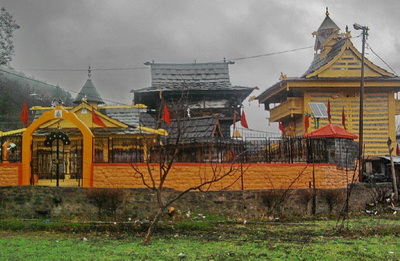
                               
Khoti temple in kinnaur.
A attractive temple devoted to goddess Chandika, extra particularly chosen as Shuwang Chandika has increase the celebrity of township Kothi in better fraction of the district.The restricted public grasp the goddess in huge respect and think her to be one of the the majority influential goddess. For desire of communal get in touch with by the restricted public with their additional higher and brahmin ridden brethren they have evolve their possess odd process of rite and adoration to this preside divinity. There is an image of gold, seated in an ark. It is dance up and descending by four citizens at the occasion of love.
Her fable go that she was the progeny of the evil person devta Banaasur who preside in excess of the Kinnaur. He had 18 sons and daughters. Chandika was the eldest amongst all. She preside in excess of Sairag the spirit of Kinnaur. But establish her grasp on the region was not so simple. The thakur of Chini lined Sairag by means of a help of a influential fiend. To beat this opponent, Chandika took the help of a slyness feminine family member call Byche. Byche dupe the fiend into insertion his extended hair flanked by the grind gravel of a water mill. Then Chandika spring on the powerless huge and detached his head with her sword. But a new head immediately replaced the old. Repeated swishes of her sword only bring onward more grin face. aggravated and exhausting, Chandika was soon in risk of drown in the sea of blood shaped by her events. abandonment her arrogance, she appear to her brothers for help. Chagaon Maheshwar respond and tell her to slay the life behind insect, balanced over the demon head. Chandika maintains her leader house at Kothi in the center of Sairag.
   
Mathi Temple at Chhitkul.
Mathi is the restricted goddess of the public of chhitkul have three temples the major one said to have been construct concerning five hundred years ago by a occupant of Garhwal. The four-sided figure ark of the goddess is complete of walnut wood and is enclosed with clothes and surmount by a tuft of yak tail. Two pole called bayanga are insert into it by income of which it is approved. Her fable go that she in progress from Brindavan and transitory from side to side Mathura and Badri Nath reached Tibet. later she came to Garhwal, and via Sirmour reach Sarhan in Bushahr and in the end reach the Barua Khad. Beyond Barua Khad she establish the country separated into seven parts. The god of Shaung village was Narenas, her nephew. She chosen him to protector the territory.Then she proceeded to Chasu village. There too she chosen the Narenas of Chasu, her nephew as a protector. Then she visit the Kamru fort where her husband Badri Nath, was a protector of the throne of Bushahr. She additional went to Sangla where her another nephew, Barang Nag, was accountable for conservation the Rupin Ghati. After that she proceed to Batseri village, where Badri Nath of Batseri, her husband was accountable for guard a put name Dhumthan. Thence forward she at home at Rakchham where Shanshares, yet one more nephew was chosen as a protector of Dhumthan. lastly she at home at Chhitkul and established there enduringly presumptuous the in general blame of conservation the seven division. following her influx, public had abundance of food, animals had enough lawn and the township begin to good. She had also a pujares. In the morning the pujares take away water from the near coil and adoration deity by on fire anger, As musical instrument are played by Domangs.
                                               
 Maheshwar Temple at Sungra.
  
The portal of Maheshwar temple of Sungra have excellent timber panel on also side. deeply cut imagery of famous Hindu deity are a luxury for the art historian. On the eastern partition are panel depict the Vishnu Avatars and the sign of the Hindu zodiac. The friezes on the attic are good-looking and the building arround the temple patio are likewise embellished . A small mineral holy place of eighth century stand a short space from the temple doorway, evidence of the site's antiquity. The Sungra Maheshwar was on one occasion said to have been attack by an opponent of phenomenal strength, often linked to the Pandava hero, Bhima. Bhima hurled a huge boulder at the temple from the ton tops crossways the Satluj. The Maheshwar deflect the projectile to one side. It at the present lies close to the road, a small method from the temple and still shelters the alpine flowers found only in the high mountains.

Chango Temples at Chango.
                  
Chango has three temples. In inferior Chango, the red ramparts of Rinchen Zangpo temple stand out atop a little promontory  but contain little of note. near, the village temple, in more usual use as a put of worship, has a big prayer helm, clay idols and modern wall paintings. A big picture of Avalokiteshwara, rudely imprinted in mineral, lies on the trail flanked by these two shrine. It was establish in some out of the way and the monks decided to place it in a temple but the combined strength of many men was inadequate to lift the mineral. Then the there site was although. The temple in higher Chango is the greatest reserved but of comparatively new vintage. close up by, a new entreaty hall, library and visitor rooms are approaching conclusion. crossways the Chango stream, balanced on top of yellow, alkaline cliffs, is an big compilation of spiritual buildings.                                                                                        

Rarang Monastery at Rarang.
                               
Tashi Temple.
Now exterior Rarang, on the Thopan side is the recently build Monastery of Tashi Choeling. This new monastery has approach in the wake of post-1960 Tibetan influence from the Drugpa sect. Close to the monastery are older dwelling and temples, amalgamation into the rocky outside of a rocky mountain side. These older unit are traced to Nyingmapa adherents.


 Durga Temple at Ropa.                      
             
Durga Temple At Ropa.
There is a Durga temple at Ropa also recognized as the Chandika temple. Chandika had apportion to herself this half-arid area when she alienated Kinnaur in the middle of her brothers and sisters. Her temple at Ropa, a new arrangement with a unbreakable strengthen real frame, is an architectural malapropism.
                                            
Charang Temple.
                        
    
Charang Temple in Kinnaur.Now further than Charang is a temple of the eleventh century recognized as Rangrik Tungma multifaceted. The temple takes its name from the divinity Rangrik Tungma and her small metal picture, astride a horse is the oldest at the temple. In all probability Rangrik Tungma have to contain be a pre-Buddhist god, engrossed into the pantheon of the afterward trust. Two other figurine statue come into view to be of substantial worth; a Maitreya seat with legs pendant, in bhadrasana and a Buddha in bhumisparsha mudra. The ramparts of the major entry are connected with soil idol, in the similar method as the mandala in the dukhang at Tabo. The wall painting below are old though the helm of life exterior the door has been redo Vrecently. There is too an attractive save of ivory and bonehandled knife and daggers at the temple.Aa lot of centuries ago, it is supposed a thief bunch of criminals from crossways the Tibetan border raided the temple. The soil imagery of defensive deity at the entry set up a great sound, like the thunder hooves of gallop livestock. The great robber droped their arms and take off, association up valley to vanish in the crevasses of the huge glaciers watercourse downward from the high climax on top of. 

 Brelengi Gompa at Brelengi near Peo

Brelengi Gompa.
Close to Reckong Peo in Brelengi there is a Buddhist Monastery also known as the Brelengi gompa.This is an imposing contemporary Buddhist edifice. The monastery of Mahabodhi civilization was construct particularly for the Dalai Lama to do the Kalachakra rite in 1992. Next to the monastery is a 10 meter figurine of the rank Buddha, which is able to be seen from a substantial coldness.

Saturday, 23 April 2016

Language spoken in Kinnaur Himachal Pardesh.

 Language.
                       
A numeral of dialects are spoken by the population of region Kinnaur which came under 'Kinnauri' or 'Kanauri'. According to categorization of language made by the Linguistic review of India, 'Kanauri' comes beneath Tibet-Chinese Family of Languages. It has additional been secret as language belonging to Western Sub-Group of Pronominalized Himalayan Group belong to Tibeto-Himalayan Branch under Tibeto-Burnab Sub-Family (Census of India 1961, Vol. 1 India, Part II-C(ii). Languages Tables.P.CL.XVI). In Shimla Hill States Gazetteer, 1910, there is talk about of three dialect verbal in Kinnaur. These are Hindi, Kinnauri and
English Also there are as many as nine dissimilar dialect use by a variety of section in area Kinnaur.

Kinnauri Peoples.


The villagers on the Tibetan edge talk Tibetan dialect of western Tibet. The degree of verbal Tibetan is incomplete to the town of Nesang, Kunu and Charang next-door Tibet. Jangram vernacular is verbal in Jangi, Lippa and Asrang village of Moorang tehsil. The Shumceho dialect is spoken in the village of Kanam, Labrang, Spilo, Shyaso and Rushkalang of Pooh tehsil. A Kinnauri-Jangram mixture is the language use in Rakchham and Chhitkul villages of Sangla tehsil. The listed castes talk a language which is earlier to that of sure parts of the next-door districts of Kinnaur. as well these dialects the cultured public of Kinnaur can talk Hindi also. Both men and women, specially in Sangla and Kalpa valley can talk English in adding to their mother tongue and Hindi.There are Buddhist temples in lots of of the village of these area yet the group of this trust do not form a important group. In Kalpa, Moorang and Pooh tehsils Lama are consult and their services utilised in presentation of a lot of spiritual ceremony. In Nichar and Sangla people do not of necessity ask Lamas on these occasion. In the nonattendance of Brahman priests the citizens do ceremony themselves


Monasticism in kinnaur Himachal Pradesh.

Monasticism
                       
Kanet boys, who study the Tibetan scriptures and are well versed in Buddhist doctrines, are called Lamas. Similarly the Kanet girls, who do not marry, but dedicate their time to the study of Tibetan scriptures are called Zomos or Jomos. They live in nunneries. The two main nunneries are at Kanam and Sunnam and in these a huge information of Zomos live. As well this, approximately each town had few Zomos. The Lamas live in the monasteries and are look ahead as very holy. In fact they are the priests of all the Kanets.

Lama Religion in Kinnaur.
There are numerous monasteries of these Lamas in Kanam, Sunnam and other village. Lamas are also Gyolong or Celibate like the Brahmchari or Dugpu, who marry but never shave. The head Lama is consult with look upon to significant responsibility occupied by citizens profess Lama religion. While respected by the population of Nichar and Sangla tehsils, Lama faith does not have a physically powerful hold in these area                                                       
There are Buddhist temples in lots of of the village of these area yet the group of this trust do not form a important group. In Kalpa, Moorang and Pooh tehsils Lama are consult and their services utilised in presentation of a lot of spiritual ceremony. In Nichar and Sangla people do not of necessity ask Lamas on these occasion. In the nonattendance of Brahman priests the citizens do ceremony themselves


Religion in Kinnaur Himachal Pardesh.

Religion
                       
As affirmed on top of, the citizens of inferior Kinnaur are generally Hindus, While a number of references of Buddhism is also obvious. Their most significant gods and goddess are Durga or Chandi, Bhairon, Usha or Ukha, Narayan, Vishnu, Badrinath and Bhimakali. The Chamang and Domang in adding have their favourite deity such as Nag Devta. As well every town has its preside god. The population of middle Kinnaur are Buddhist as well as Hindu. In the northern area Buddhist power is stronger. The significant divinity of center Kinnaur are Chandi,Gauri Shankar, Kansa and Narayanjee. There are some monasteries as well the temples. The town god at Kanam worshipped by citizens of Buddhist trust is Dabla who has sure features linked with the previous Bon faith. The picture of Dabla is install alongwith those of Buddha and Guru Rinpoche (Padma Sambhava) in one of the monasteries at Kanam.

Buddhism Religion in Kinnaur.
The faith of higher Kinnaur is typically Buddhism, having the organization of Lamaism. They generally go after Mahayan Buddhism faith. approximately each town has a monastery with Lamas and jomos, who are recruit from in the middle of the Rajput (Kanet) only. A main fraction of the region is occupied by citizens profess Lama religion. While respected by the population of Nichar and Sangla tehsils, Lama faith does not have a physically powerful hold in these areas. There are Buddhist temples in lots of of the village of these area yet the group of this trust do not form a important group. In Kalpa, Moorang and Pooh tehsils Lama are consult and their services utilised in presentation of a lot of spiritual ceremony. In Nichar and Sangla people do not of necessity ask Lamas on these occasion. In the nonattendance of Brahman priests the citizens do ceremony themselves


Lifestyle of kinnauri peoples in Himachal Pardesh.

Lifestyle.                 

Lifestyle Of Kinnauri Peoples.
Usually, Kinner houses have storeroom for custody grain and dried fruits, and divide wooden grain-storage space structure, called kathar. Pakpa, a part of sheepskin or yakskin, is frequently located on the khayarcha mat.Usually Kinners use gear complete of brass and bronze. contemporary influence have built-in the foreword of Chinese crockery, and gear made of stainless steel and aluminium.Clothes are mostly of wool. The thepang, a grey woollen cap, is worn with a pallid velvet band. The Tibetan chhuba, a long woollen coat  which resemble an achkan, is damaged as well, with a sleeveless woollen jacket.


Typically Dress Of Kinnaui Peoples.
While men wear woollen churidhar pajamas, and modified woollen shirts such as the chamn kurti, the women enfold themselves up in a dohru. The first wrap of the dohru is based on the back, with embroidered borders display throughout its distance end to end, which stretch to the heels. Darker shades of colours are favored for the Dohru, though other wonderfully coloured shawls may be worn, typically drape in excess of the shoulders.

A choli, one more type of full sleeved blouse worn by women, may serve as a ornamental inside layer as well.The Kinners are secret mostly into two castes: inferior and higher caste. once more together of these category are alienated into sub classes. The caste scheme is more common in the inferior and center Kinnaur region.

Food Habits in Kinnaur Himachal Pardesh.

Food Habits.
         
The clip food is wheat, ogla, phafra and barley which are restricted create. as well these kankani, cheena, maize, chollair and bathu are also taken. The main pulse consumed are peas, black peas, mash and rajmash. The vegetables typically inspired are cabbage, turnips, peas, beans, pumpkin, potato, lady finger and tomato as well some close by obtainable wild green vegetables leaves. They relish rice too which is import from the plains. Taking a salty tea called cha in the morning and evening is very well-liked in the middle of the Kannauras which is more often than not in use the length of with, made of dry barley flour.
                       
Cha.     
             
They are non-vegetarian and enjoy goat and ram's meat. captivating of intoxicating drinks in their day to day life and also on the ritual or celebratory occasion is fairly ordinary in the middle of them. Alcohol is distill at the family level. It is complete out of fruits like grapes, apple, pear etc. grown-up nearby and of barley. The Kannauras are very fond of music, dance and singing.

Houses and Equipment in Kinnaur Himachal Pardesh.

Houses and Equipment.
                   
House & Equipment in Kinnar Himachal Pardesh.
The accommodation prototype of higher Kinnaur is dissimilar from that of inferior Kinnaur .In the inferior Kinnaur the house are two storeyed and build of stone and wood. These are also slate roofs or having flat roofs made of layer of bhojpatra (tree bark) enclosed with ground. The door are frequently folding and open at home.In higher Kinnaur the houses are typically built of stone. These are flat covered and enclosed with ground. They are ill-built on explanation of the shortage of wood. The houses are two storeyed and door are small. The earth floor is used as livestock shed and upper storey for livelihood purpose. The range and pedestal area of the house depends upon the site obtainable for building. The houses are white wash in inferior as well as higher Kinnaur. as well these customary houses, now RCC houses built in contemporary design are also future up.              
Generally the household have some wooden chest for custody granule and dry fruits. In adding the majority of the houses have divide wooden grain storage space structure locally called 'Kathar'. Khayarcha is a mat used for session purpose, which is complete of goats hair. Pakpa which is skin of sheep or goat or some wild animal as frequently located on khayarcha for session. usually the citizens second-hand to use gear made of brass, bronze and aluminum. Though, now a days with the greater than before exterior get in touch with they are fast adopt the china crockery and gear made of stainless steel.